
Lithium-ion batteries are one of the most favored choices for modern devices. They are known for their reliability, lightweight design, and long lifespan. However, when you start searching for lithium-ion batteries, you will find several types. Among them, LFP and NMC batteries are two of the most common. Both store energy, but they use different internal materials. This is what gives rise to a debate: LFP vs NMC battery, which one truly stands out? If you are new to them, worry not! In this guide, I will compare LFP and NMC head-to-head and help you choose the most reliable one. So let’s get started.
Overview of LFP and NMC Battery
LFP stands for Lithium Iron Phosphate. It is the type of lithium-ion battery that uses lithium iron phosphate as its cathode material. They store and release energy by moving lithium ions between the positive and negative electrodes. They are also commonly known as LiFePO4 batteries.
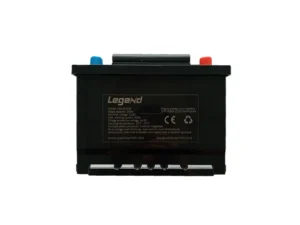
LFP batteries are known for their good safety and long cycle life. In these batteries, the cathode material (lithium iron phosphate) is what provides a very stable structure. The battery handles repeated charging and discharging, providing good thermal stability. That’s why you can find LFP batteries in solar storage, electric vehicles, and backup power systems.
NMC stands for Nickel Manganese Cobalt. It is also a type of lithium-ion battery that uses a combination of nickel, manganese, and cobalt in its cathode. It is known for its high energy density, which allows it to store more energy in a smaller design.
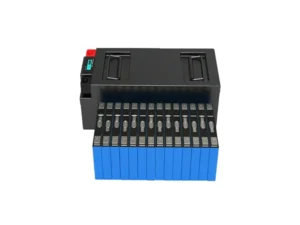
NMC also works the same as LFP. For example, during charging, lithium ions move from the cathode to the anode, where they are stored. When the battery is in use, these ions move back to the cathode, producing electrical energy. But the cathode materials (nickel, manganese, and cobalt) are what help NMC store more energy. So these batteries are used in EVs, power tools, electronics, and portable devices.
LFP vs NMC Battery: Key Differences
Now you have basic know-how of both lithium-ion battery types. Right? Now, since their working principles are similar, many think they are the same. But in reality, when you look more closely, several factors set both LFP and NMC apart. So let’s discuss the key differences and help you understand which battery option suits you better.
1- Energy Density & Battery Size
Energy density is how much energy a battery stores relative to its size or weight. So this is the first major difference between LFP and NMC. Interestingly, NMC batteries have higher energy density than LFP batteries. This means it stores more energy in a smaller size. The reason lies in its chemistry.
As I said above, NMC uses nickel, manganese, and cobalt in its cathode. These materials are what help achieve higher energy density. On the flip side, LFP needs more space and weight to store the same amount of energy. That directly means lower energy density comparatively. LFP uses lithium iron phosphate, which generally stores less energy in the same amount of space.
2- Safety & Thermal Stability
Safety is another important difference between LFP and NMC batteries. There is no doubt that both are made safe with a proper battery management system. However, LFP has a more stable chemical structure. This structure holds oxygen more tightly, so it is less likely to release oxygen when the battery becomes very hot. This oxygen is what ignites fires.
So basically, LFP batteries have more thermal stability and are safer at high temperatures. On the other hand, NMC uses nickel, manganese, and cobalt in its cathode. When an NMC cell becomes severely overheated, its cathode releases oxygen more readily. This makes an already dangerous situation worse. To prevent this, NMC batteries rely on extra cooling systems.
3- Cycle Life & Battery Lifespan
Cycle life is all about how many times a battery can be charged and discharged before its capacity drops noticeably. In this regard, LFP batteries stand out. Every time you use and recharge a battery, a small amount of wear happens inside the lithium cells. Over many cycles, this wear slowly reduces the amount of energy the battery stores. LFP batteries handle repeated use better, resulting in a longer cycle life.
This is because of its stable internal chemistry. So, the LFP goes through many charging and discharging cycles without losing capacity as quickly. In contrast, NMC batteries also have a good working life, but they usually experience more capacity loss with repeated cycling. This does not mean an NMC battery will suddenly stop working. Instead, its available capacity gradually becomes lower.
4- Weight & Portability
Weight and portability also differ between LFP and NMC. Here, NMC usually has an advantage due to its higher energy density compared to LFP. This means an NMC battery can store the same amount of energy in a smaller package. Its cathode material allows for more energy storage.
This makes it easier to carry, and for vehicles, it helps them store more energy without adding weight. LFP batteries are generally heavier for the same energy density. They need a larger battery pack to reach that same energy capacity. A larger pack usually means more cell material and, therefore, more weight. This makes portability less practical.
5- Charging Speed & Charging Performance
Charging speed tells us how quickly a battery takes in energy from a charger. NMC batteries often support fast charging because of their higher energy density. Their cells are designed to accept a high charging current. But it is still not accurate to say every NMC battery charges faster than LFP. Charging speed mainly depends on cell design, charger, temperature, charging current, and BMS. Many LFP batteries also support fast charging.
However, NMC batteries generally charge faster. During charging, the battery produces significant heat. But the NMC cooling system dissipates heat, enabling efficient charging. In LFP, low temperatures can affect charging performance. At very low temperatures, charging can cause unwanted chemical changes within the battery. This damages the cells. Because of this, an LFP battery needs to warm up before it safely accepts a high charging current.
6- Power Output & Overall Performance
Power output refers to how quickly a battery delivers stored power. That’s different from energy density, which refers to how much energy a battery can store in its compact size. So NMC generally has the edge over LFP. They deliver strong bursts of power due to greater energy storage.
This makes them well-suited for applications that require quick acceleration. LFP batteries still provide good power output for everyday applications. However, their main advantage is not maximum power in the smallest package. That’s why they are not meant for strong power bursts.
7- Cold Temperature Performance & Reliability
When the temperature drops, NMC generally performs better than LFP. Basically, low temperatures slow down the chemical reactions inside a battery. So in reality, both types can lose some performance. But LFP is usually more affected by cold temperatures. At very low temperatures, this battery makes charging more difficult. If an LFP cell is charged when it is too cold, lithium builds up on the anode instead of moving into it.
This can damage the cell over time. Because of this, many LFP battery systems use a BMS and heating system to warm the battery before charging in cold weather. NMC cells also get affected by cold, but they have the ability to maintain better low-temperature performance. Their electrochemical reactions and lithium-ion movement remain usable at low temperatures.
8- Maintenance & Operating Requirements
Both LFP and NMC batteries need much less routine maintenance than older batteries. However, their operating requirements differ. How? Actually, LFP is generally easier to manage for long-term use. Its stable chemistry gives it good resistance to heat and repeated cycling.
It also handles regular charging and discharging with less capacity loss. On the flip side, NMC needs more careful thermal and charging management. During fast charging, it produces a high amount of heat that must be handled. For this, it needs an advanced BMS and cooling system.
9- Applications & Best Use Cases
Due to variations across many aspects, the usability of both NMC and LFP also varies. For example, NMC batteries perform well where size, energy density, and weight matter. They are commonly used in:
- Electric vehicles
- Electric bikes
- Power tools
- Portable electronics
- Drones
- Hybrid vehicles
- Portable power stations
- Mobile equipment
Conversely, LFP batteries are chosen for uses that demand long cycle life and good thermal stability. You can often find them in:
- Solar energy storage
- Home backup systems
- Industrial energy storage
- Electric vehicles
- RVs
- Marine systems
- Portable power stations
- Telecom backup systems
10- Cost & Material Availability
Lastly, it comes to overall cost and affordability, where NMC and LFP show differences. Cost varies with material availability. So LFP batteries are more affordable as they use lithium, iron, and phosphate. These materials are readily available and cost less, which makes the batteries more cost-effective.
However, NMC batteries use nickel, manganese, and cobalt in their cathodes. Among these, nickel and cobalt are highly expensive due to limited availability and higher market demand. Cobalt also has supply-chain concerns. This makes NMC batteries more sensitive to changes in raw material availability. All this makes NMC more expensive.
LFP vs NMC Battery: Which One Should You Choose?
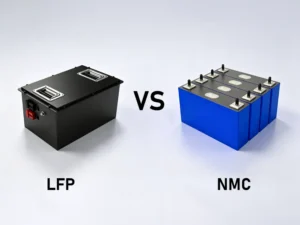
There is no single best choice between NMC and LFP batteries. The final choice depends on your needs.
Choose LFP if you want long battery life, better safety, and lower cost. These batteries are better for solar storage, backup power, and frequent daily use. However, you should go for NMC batteries if you prefer higher energy density, lower weight, and more energy in less space.
From the differences, you can see that each lithium-ion battery has its own pros and cons. So the choice really depends on what you expect from the battery. For example, if the battery stays in one place, such as in a solar or home backup system, the extra weight of LFP will not be a big issue.
In return, you get a battery that handles many charging and discharging cycles and offers good thermal stability. For these types of applications, LFP provides better long-term value. NMC makes more sense when space and weight are important. Its higher energy density allows it to store more energy in a smaller and lighter battery.
This is a big advantage in electric vehicles, electric bikes, and portable equipment. However, NMC usually costs more and needs more careful temperature management. So before making the final choice, always consider which battery matches your specific needs.
Conclusion
LFP and NMC batteries both have an important place in today’s energy systems. As they both use lithium-ion technology, many get confused and consider them similar. To clear up this confusion, I have discussed the key differences between NMC and LFP in this guide. LFP stands out for safety, long cycle life, stable performance, and lower cost. However, NMC stands out for high energy density, lower weight, and compact size. So if you need a battery for solar storage, home backup, or regular daily cycling, LFP is the more practical option. If you need more energy in less space, such as in an electric vehicle, NMC is the better fit.